The leftovers
A grandmother’s lesson, a gay boy’s secret, and the long road home.

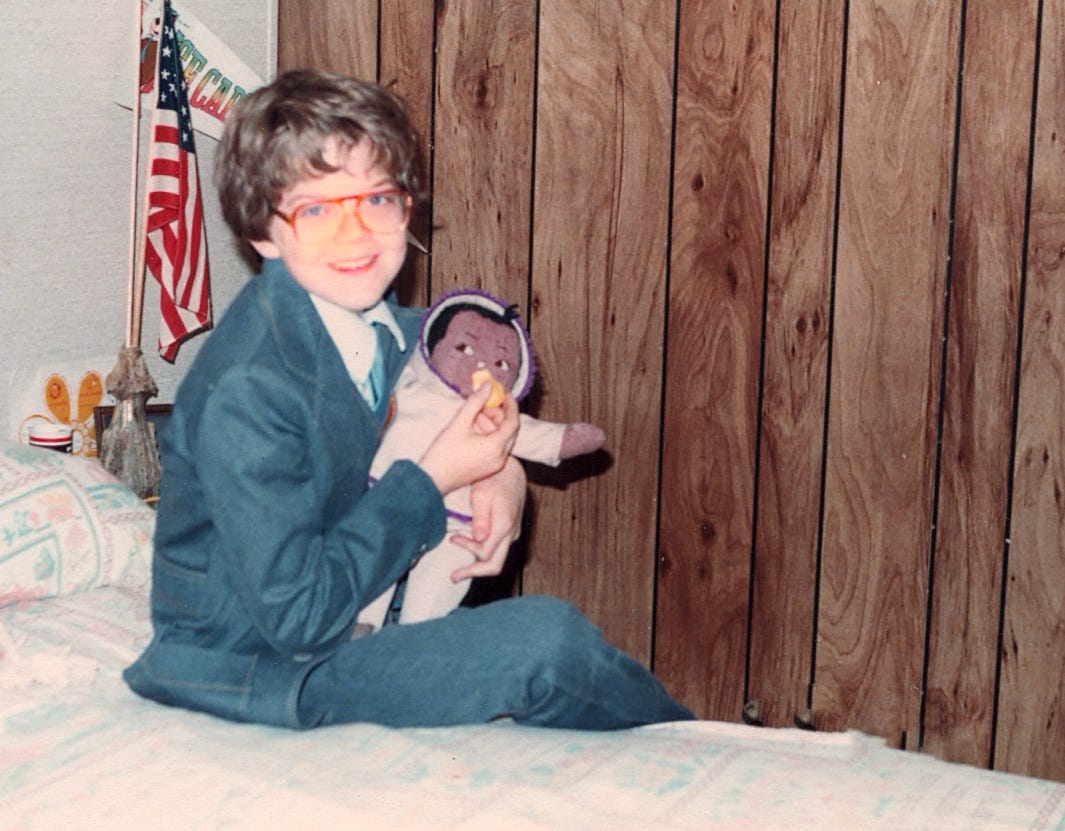
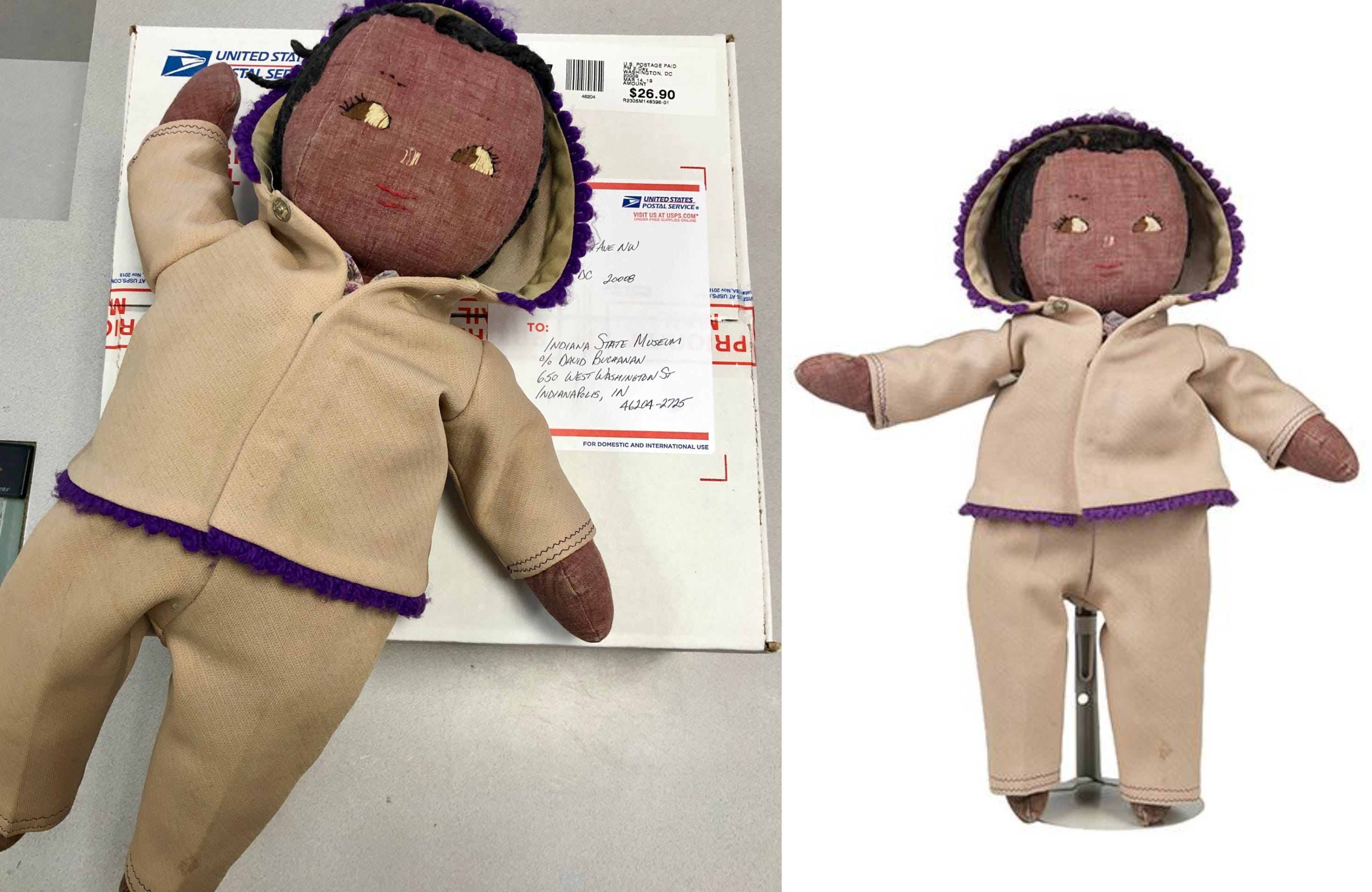
When I was about six years old, my grandmother made me a handcrafted cloth doll. She sewed every stitch herself; his body, shirt, and pants were all done without a machine. She even spun his yarn hair.
Grandma loved to sew and had an entire closet full of fabric, some of it stored for decades. She would use bits and pieces to make what she called “leftovers” – a quilt, blanket, doll clothes, you name it. She’d lived through the Great Depression, and nothing was ever wasted.
I named him Squanto. It was the only Indigenous name I knew, besides Pocahontas. She’d used tan fabric for his “buckskin” coat and pants, but his purple paisley shirt gave away that he was a leftover.
Grandma wasn’t Native either, but she was kind and always took a special interest in me. Without a doubt, I was her favorite. Squanto might be a leftover, but he was made with love. As the youngest of her grandchildren, ten years behind my sister and 25 years after her oldest grandchild, I was a leftover too.
My family had moved to Indiana when I was a toddler, so she deemed it appropriate that I had an “Indian” baby doll.
She told me Squanto would listen to all my problems and never judge me. And she was right. Living deep in the countryside and without many friends my own age, Squanto became my constant companion and confidant.
I carried him everywhere as a kid. When I started taking piano lessons, I’d sit him on the bench beside me so he could “watch” as I learned the scales. We watched The Muppet Show together every Saturday night.
Even as I grew up, he still held a place of honor in my heart. I’d nestle him between my pillows every morning when I made my bed and sometimes when I was lonely, had been picked on at school, or when my parents divorced, I’d still whisper him my problems.
Mom remarried after the divorce and Grandma detested her new husband. She came to stay with us for a week once when I was about 12 and was delighted to find Squanto sitting guard every morning. She spent more time in my room than anywhere else in the house as she avoided my stepfather and used the time to give out matronly advice about every subject under the sun.
One of her lessons was about Squanto. While I knew him mostly from elementary school lessons about Thanksgiving, she filled in some of the details. He had been kidnapped and enslaved, taken to Europe, and learned English during captivity. Somehow, he had made his way back across the ocean, where he found out that his tribe had been wiped out by an epidemic.
When the Mayflower landed soon after he had arrived back home, he reached out and helped them establish relations with other tribes, taught them how to sow and fertilize native crops, and became a valued guide for the Pilgrims until he died.
Despite enduring slavery and loss, she pointed out, he had opened his heart to assist “the white man” who had oppressed him. He’d “turned the other cheek,” she said, using one of her favorite Bible homilies to tidily wrap up her story.
Throughout my school years, I was bullied as the “gay boy.” Slightly effeminate and friends with all the girls, I got labeled long before I even knew what gay meant. The other children were my oppressors.
And when I was 16 and wrestling with whether I could say the words “I’m gay” out loud, one night I turned to Squanto, who still had his place of honor on the bed. For years, he’d been more of a traditional decoration than a plaything, but I had no one else to talk to about the feelings I was having for a classmate.
“I think they’re right. Maybe I’m gay,” I told him that night.
About six months later, Mom tossed me out of the house when she found out that the other boy and I were dating. I packed Squanto up, putting him in a box with other childhood mementos; he never made it back onto the bed.
RELATED: Growing older without growing quiet
Over the years, I became an activist for gay rights in Indiana, doing everything from picketing businesses to lobbying legislators. When the internet arrived, I started using it to advance the local cause.
In 2001, I started one of the first LGBTQ blogs, expanding the scope nationally. While it was made for our community, straight people flocked to it too. Unexpectedly, it grew into a powerhouse force on the internet as times changed and acceptance grew.
Hillary Clinton and Barack Obama used the platform to reach out to the queer community during the 2008 presidential campaign. A woman was released from jail due to our reporting. Companies added nondiscrimination protections for LGBTQ workers when we exposed working conditions.
My own star rose with the site’s. It won multiple awards and after I sold the website, it was archived by the Library of Congress.
I moved to Washington DC to be closer to the action, reporting and lobbying on behalf of the community for other publications. Suddenly, I was being invited to the White House, hobnobbing with Senators, learning from my heroes, and interviewing movement leaders. I poured everything I could into sharing the information with readers. Like Squanto, I found my calling guiding my former oppressors into a better life.
One year, the Smithsonian asked me to donate my papers and some memorabilia to their collection. An archivist came to our apartment, searched through everything I had saved, and took what they wanted, from scrapbooks to campaign signs, old toys to copies of speeches. Buried at the bottom of a box in the back of a closet was Squanto. He was the only thing I saved.
I posted about it on social media and a few days later, the Indiana State Museum reached out. I quickly gave them the stuff the Smithsonian had passed over, but Squanto, dusty and forgotten, remained too. Instead of being proudly displayed and cherished in Indiana, he was rotting away in a tote in the nation’s capital, I realized.
Before I could change my mind, I donated Squanto too. As I packed him carefully into a shipping box, his carefully stitched eyes reflected all the lessons Grandma had imparted, including the most important: to turn the other cheek. I’d long since forgiven my mom and spent decades teaching Americans how to respect and live among the queer people around them.
Squanto is now part of their permanent collection, preserved with other artifacts that speak to Indiana’s personal and cultural history. Grandma’s name is listed as his creator, and a short quip describes his importance in my life. They’re both honored for their unexpected role in pioneering LGBTQ rights in a hostile environment.
He may have started out as a homemade doll from a grandmother who loved me deeply, but he became a witness, a confidant, and a quiet thread connecting my childhood to the man I became. Neither of us were leftovers after all.